ASEAN Energy Real-time Price Revolution: August 2026 Energy Market Volatility and Investment Opportunities
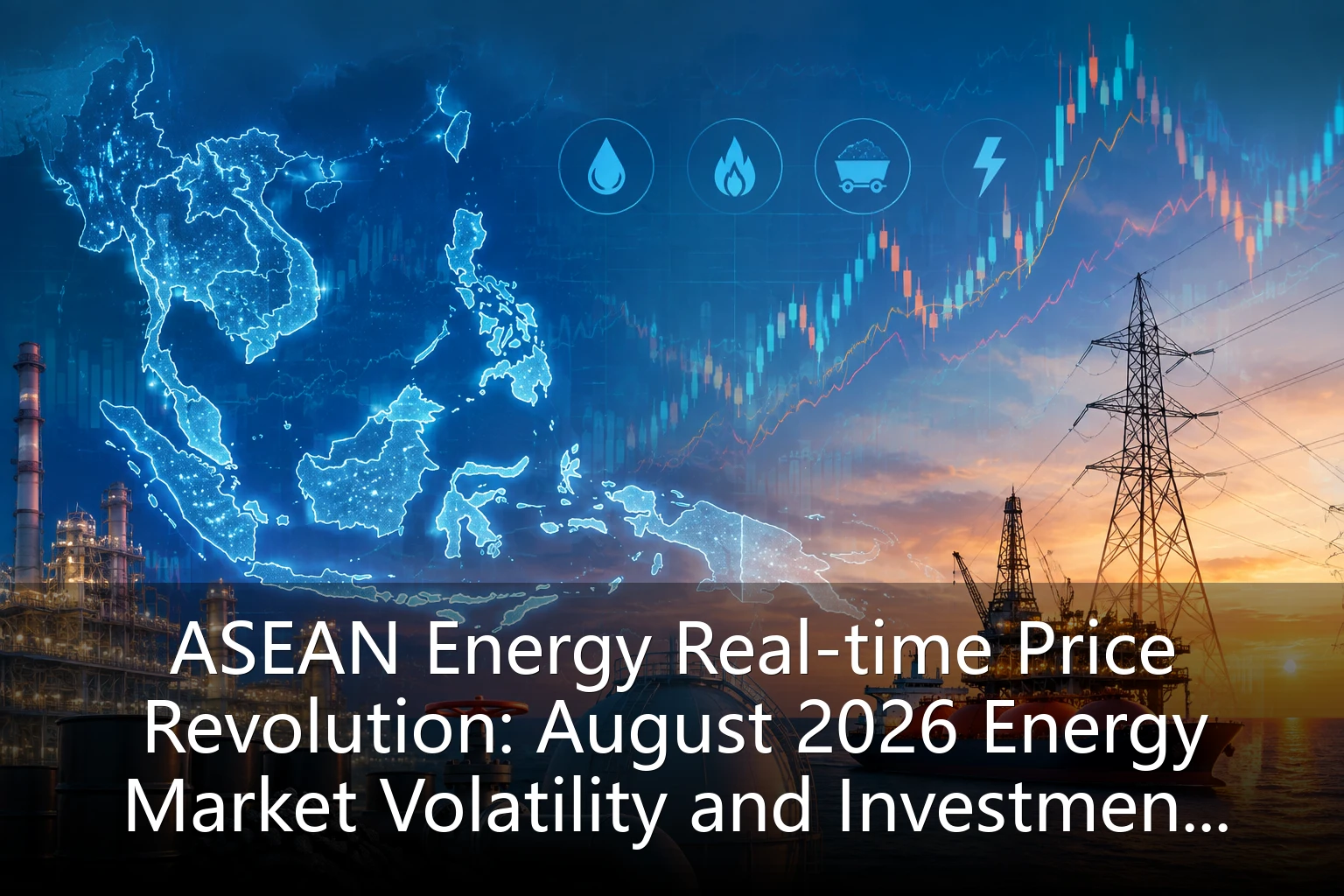
In August 2026, global energy markets continued to experience volatility, with the ASEAN region, as a major global energy consumer and producer area, drawing significant investor attention to its real-time energy prices. With the evolution of the global economic landscape and deepening regional integration, the ASEAN energy market is undergoing unprecedented changes. This article will conduct an in-depth analysis of the current real-time price dynamics, influencing factors, and investment opportunities in the ASEAN energy market, providing comprehensive reference for investors.
Overview of ASEAN Energy Market: Regional Characteristics and Global Impact
As one of the fastest-growing regions globally, the ASEAN region continues to see rising energy demand. According to the latest data, ASEAN countries have an average annual energy consumption growth rate of 5.2%, higher than the global average. The regional energy structure shows diversification, with multiple energy forms including oil, natural gas, coal, and renewable energy coexisting.
Indonesia, as the largest energy producer in ASEAN, possesses abundant oil, natural gas, and coal resources; Malaysia and Thailand are major energy consumers in the region; emerging economies like Vietnam and the Philippines are experiencing rapid growth in energy demand. This imbalanced pattern of energy production and consumption has made energy trade within ASEAN and with other global regions increasingly frequent, with fluctuations in real-time energy prices directly affecting economic stability and investment decisions in various countries.
Analysis of August 2026 Real-time Energy Prices: Multi-commodity Price Trend Analysis
In the crude oil market, ASEAN region's real-time crude oil prices showed an upward trend with fluctuations in August 2026. Brent crude futures prices remained around $85/barrel, an increase of about 3.5% from the previous month. This trend was mainly influenced by multiple factors including declining global crude oil inventories, OPEC+ maintaining production cuts, and geopolitical tensions. The crude oil export prices from major ASEAN producers Indonesia and Malaysia also rose, but with relatively moderate increases.
The natural gas market showed a differentiated trend. After experiencing significant fluctuations earlier, liquefied natural gas (LNG) prices stabilized in August, with Asian LNG spot prices maintaining a range of $18-20 per million British thermal units. However, pipeline gas prices fluctuated considerably due to regional supply and demand differences, with pipeline gas import prices in Thailand and Singapore increasing by about 7% from the previous month, while domestic gas prices in Indonesia remained relatively stable.
In the coal market, ASEAN thermal coal prices continued to face pressure in August. The FOB price of Kalimantan Island thermal coal (index 6000) was approximately $95/ton, a decrease of about 2.5% from the previous month. This decline was mainly affected by expectations of global economic slowdown and weak demand from major importers like China and India. However, high-quality coking coal prices remained relatively firm, with Australian coking coal quotes maintaining around $130/ton.
In terms of electricity market prices, affected by seasonal factors and fuel costs, electricity prices varied significantly across ASEAN countries. Vietnam and the Philippines, due to insufficient hydropower output and increased reliance on thermal power, saw average electricity prices increase by about 8-10% in August. Meanwhile, Malaysia and Thailand, with relatively abundant hydropower resources, experienced smaller electricity price fluctuations, with only about 2-3% increases.
In-depth Analysis of Key Factors Affecting Energy Prices
Geopolitical factors remain the primary influence on ASEAN energy prices. The recent escalation of tensions in the South China Sea poses potential threats to regional energy transportation security, leading to increased shipping insurance costs and indirectly pushing up energy prices. Meanwhile, political instability in the Middle East continues to affect global crude oil supply chains, causing chain reactions on energy import prices in the ASEAN region.
The impact of climate factors on the energy market is increasingly prominent. During the summer of 2026, Southeast Asia experienced rare high temperatures, leading to a surge in electricity demand and significant increases in air conditioning loads, which in turn pushed up electricity and natural gas prices. Abnormal weather also affected hydropower output, forcing some countries to increase thermal power generation and further raising energy costs.
The supply-demand relationship is the intrinsic factor determining energy prices. From the supply side, ASEAN's new energy capacity continues to expand, with solar and wind power installed capacity increasing by 15% year-on-year, alleviating pressure on traditional energy supply to some extent. However, energy infrastructure development lags behind demand growth, with bottlenecks in transmission and distribution networks constraining efficient energy allocation, leading to energy supply tensions in some regions.
From the demand side, with the acceleration of industrialization and urbanization in ASEAN countries, energy demand continues to grow. The rise of emerging industries such as data centers and artificial intelligence has brought huge electricity demand, presenting new challenges to the energy supply structure.
Analysis of Investment Opportunities and Risks in the ASEAN Energy Market
Facing an increasingly volatile energy market, investors need to carefully evaluate various investment opportunities and risks. In the traditional energy sector, despite short-term price fluctuations, high-efficiency, low-emission traditional energy projects still have investment value in the long term. Especially traditional energy enterprises in ASEAN countries with complete industrial chains and resource advantages are expected to benefit from market integration.
The new energy sector is the most promising investment direction in the ASEAN energy market. New energy projects such as solar, wind, and energy storage technologies have received strong policy support in ASEAN countries, with gradually improving investment returns. Feed-in tariff subsidy policies for renewable energy introduced by countries like Vietnam and Thailand provide stable income guarantees for new energy projects.
The energy infrastructure sector also holds significant investment opportunities. With the acceleration of ASEAN energy integration, there is strong demand for infrastructure construction such as cross-border power grid interconnection, LNG receiving terminals, and oil storage facilities. These projects typically have stable cash flows and longer investment cycles, suitable for long-term investors.
However, investors should also be alert to related risks. Energy price volatility is the primary consideration, especially against the backdrop of increasing global economic uncertainty, where energy prices may experience sharp fluctuations affecting investment returns. Policy risks cannot be ignored either, as adjustments in national energy policies may change the market landscape and affect investment returns. Additionally, geopolitical risks, environmental risks, and technical risks need comprehensive assessment.
Future Outlook and Investment Recommendations for the ASEAN Energy Market
Looking ahead, the ASEAN energy market will show trends of diversification, clean energy transition, and intelligent development. With the advancement of carbon neutrality targets, the proportion of renewable energy will gradually increase, with renewable energy expected to account for over 30% of the energy structure in ASEAN countries by 2030. Energy digitalization will also accelerate, with new technologies such as smart grids and the energy internet widely applied to improve energy system efficiency.
For investors, the following strategies are recommended to seize investment opportunities in the ASEAN energy market: first, focus on traditional energy enterprises with resource advantages and scale effects, especially those with first-mover advantages in new energy transformation; second, prioritize layout in new energy fields such as solar, wind, and energy storage to grasp policy dividends and investment opportunities brought by technological progress; third, pay attention to investment opportunities in the energy infrastructure sector, especially cross-border energy cooperation projects; fourth, adopt a diversified investment strategy to reduce investment risks in single energy commodities or regions.
In addition, investors should closely monitor changes in ASEAN energy policies, geopolitical dynamics, and global energy market trends to adjust investment strategies in a timely manner. Against the backdrop of increasing energy price volatility, the flexible use of financial derivatives such as futures and options for risk management will be an important means to improve investment returns.
Conclusion
The ASEAN energy market in August 2026 presents complex and volatile characteristics, with fluctuations in real-time energy prices reflecting deep contradictions in global economic changes and regional energy transformation. Facing this situation, investors need to maintain rational judgment, conduct in-depth analysis of market fundamentals, and grasp long-term trends to achieve stable returns in the ASEAN energy market full of opportunities and challenges. With the acceleration of ASEAN economic integration and continuous optimization of the energy structure, the ASEAN energy market will provide more high-quality investment opportunities for global investors.