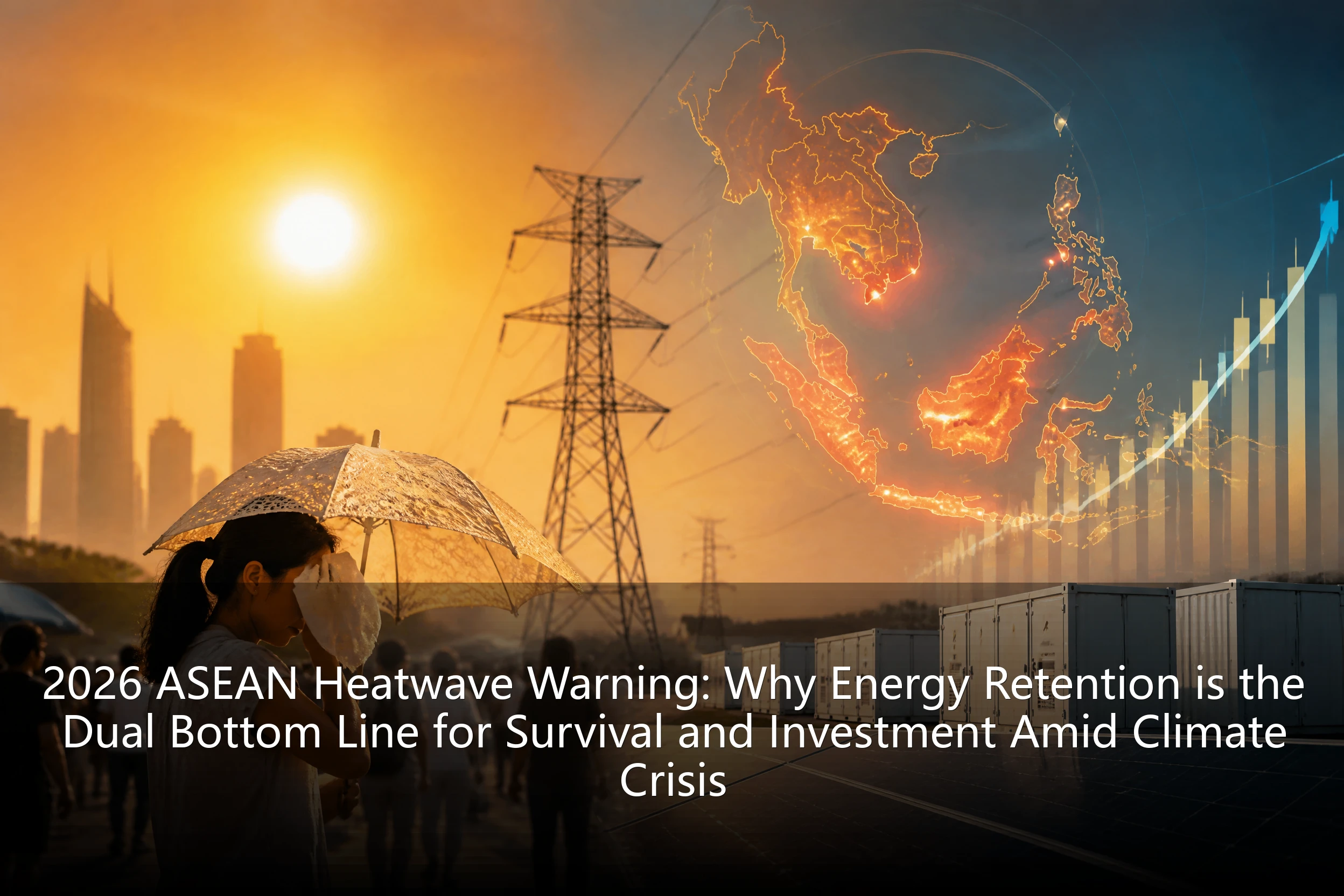
On August 4, 2026, meteorological departments across multiple ASEAN countries successively issued top-level red heat warnings. From the Red River Delta in northern Vietnam to the Bangkok plain in Thailand, temperatures in many areas broke historical records, leading to an explosive surge in urban electricity load. In this rare climate anomaly, the traditional energy supply system is facing an unprecedented stress test. However, behind the macro grid pressure, a micro yet highly penetrating concept—Energy Retention—is rapidly spilling over from the personal health sector to become a core proposition reshaping Southeast Asia's investment logic and lifestyle.
Normalization of Extreme Climate: Macro Energy Shortage Forces Micro Energy Retention Awakening
Entering the third quarter of 2026, Southeast Asia seems trapped in a giant pressure cooker. According to data from regional climate monitoring centers, the average temperature in major ASEAN cities over the past three months has soared by 2.5 degrees Celsius compared to the same period in previous years. Extreme heat directly triggered a surge in air conditioning demand, sharply reducing grid reserve capacity in multiple countries, with some industrial zones already implementing orderly power consumption plans.
Against this backdrop, macro-level energy shortages are transmitting to micro-level energy anxiety. In the past, energy discussions were often confined to national grids, coal inventories, or natural gas futures; today, a growing number of Southeast Asia's middle class and high-net-worth individuals are focusing on individual-level Energy Retention. Energy Retention refers to maintaining the energy balance of the body, mind, and even family systems through scientific energy management techniques to cope with external uncertainties. As external energy supplies become fragile, looking inward and building a personal energy moat has become a new rigid demand for ASEAN urbanites in 2026.
Why Retain Energy? The Dual Game of Body Capital and Cognitive Dividends
The explosive popularity of the Energy Retention concept is no accident. Under the dual impact of persistent heat and the fast-paced modern society, the human body is like an overloaded grid, constantly facing the risk of blackouts. The latest 2026 cross-disciplinary studies in medicine and psychology show that prolonged fatigue and energy overdraft accelerate telomere shortening by 30%, significantly increasing cardiovascular disease risks and causing a cliff-like drop in cognitive decision-making abilities.
This explains the core logic of why to retain energy: in an era of escalating uncertainty, personal energy reserves are not just health indicators but core competitiveness. For investors and entrepreneurs, severe market volatility requires extremely acute judgment, and the prerequisite for all this is abundant health energy.
- Physical Energy Retention: It is not mere rest, but maintaining the body's metabolic energy conservation through precise sleep cycle management, intermittent energy supplementation, and micro-exercise interventions. In high-temperature environments, avoiding ineffective energy dissipation (such as excessive exposure to thermal radiation) is key to retaining energy.
- Psychological Energy Retention: Information overload and emotional friction are modern energy black holes. Energy retention methods emphasize building a psychological firewall, using mindfulness interventions and attention quota management to focus limited cognitive resources on high-value decisions and creation.
From Individual to System: Energy Retention Philosophy Reshapes Southeast Asia Investment Logic
From the perspective of the ASEAN Global Investment Network, Energy Retention has transcended personal health to evolve into a profound investment philosophy and industrial trend. In Southeast Asia's 2026 capital markets, funds are converging into the energy management track at unprecedented speeds.
First, at the level of power supply and demand dynamics, extreme heat has driven up short-term energy prices but also forced the rise of distributed energy and virtual power plants. This shares the same philosophy as personal Energy Retention—rather than relying entirely on the main grid, it is better to build one's own micro energy reserves. In capital markets, ASEAN local tech enterprises deeply engaged in energy storage microgrids and smart energy consumption management are receiving excess capital premiums.
Second, in the grand narrative of Southeast Asia energy transition, Energy Retention represents restraint and efficiency. Over the past decade, Southeast Asia's energy investments focused on expanding supply (increasing installed capacity), while the 2026 turning point lies in reducing consumption and increasing efficiency. Energy efficiency management platforms, smart temperature control hardware, and personal health energy monitoring wearables form a new investment golden triangle. Industry estimates suggest that by the end of 2026, the regional market size for personal and enterprise-level energy management solutions will exceed 15 billion USD.
Mastering Energy Retention Methods: Building an Energy Field to Cross Cycles
Facing the dual cycles of climate warming and market volatility, how can Energy Retention be translated into actionable lifestyles and investment strategies? Industry experts propose the 3D Energy Reshaping Principle:
- Identify Energy Leaks: Just as companies audit balance sheets, individuals need to regularly inventory energy leaks in their daily routines. Is meaningless socializing depleting mental energy? Or are poor postures causing physical energy loss? Precise identification is the first step in energy retention.
- Build an Energy Buffer: In financial investing, cash reserves are buffers against risk; in the energy retention system, high-quality deep sleep and 15 minutes of daily meditation serve as personal energy buffers. During extreme heat, a proper afternoon nap is not only a physiological need but also an important energy retention method to reset the nervous system.
- Align with Energy Rhythms: Instead of blindly pursuing 24-hour efficiency, align with the human body's ultradian rhythms. Handle difficult investment decisions during energy peaks and mechanical tasks during troughs, achieving peak-valley-flat scheduling of energy utilization.
Conclusion: Energy Retention is the Hardcore Long-Termism of 2026
As the 2026 heatwave sweeps across ASEAN, we see not only the red lines on grid load charts but also humanity's profound reflection on its own energy management. Why retain energy? Because in a world of accelerating consumption, whoever manages their own energy better will maintain acuity, health, and creativity over the long years.
Whether for ordinary individuals striving to improve life quality or investors deeply engaged in Southeast Asia's energy market, Energy Retention is no longer an optional bonus, but a survival bottom line to cross extreme climate and market cycles. From macro energy transition to micro personal routines, maintaining energy balance is the hardcore long-termism of our era.