ASEAN Natural Gas Price Volatility Intensifies: In-depth Analysis of August 2026 Market Landscape
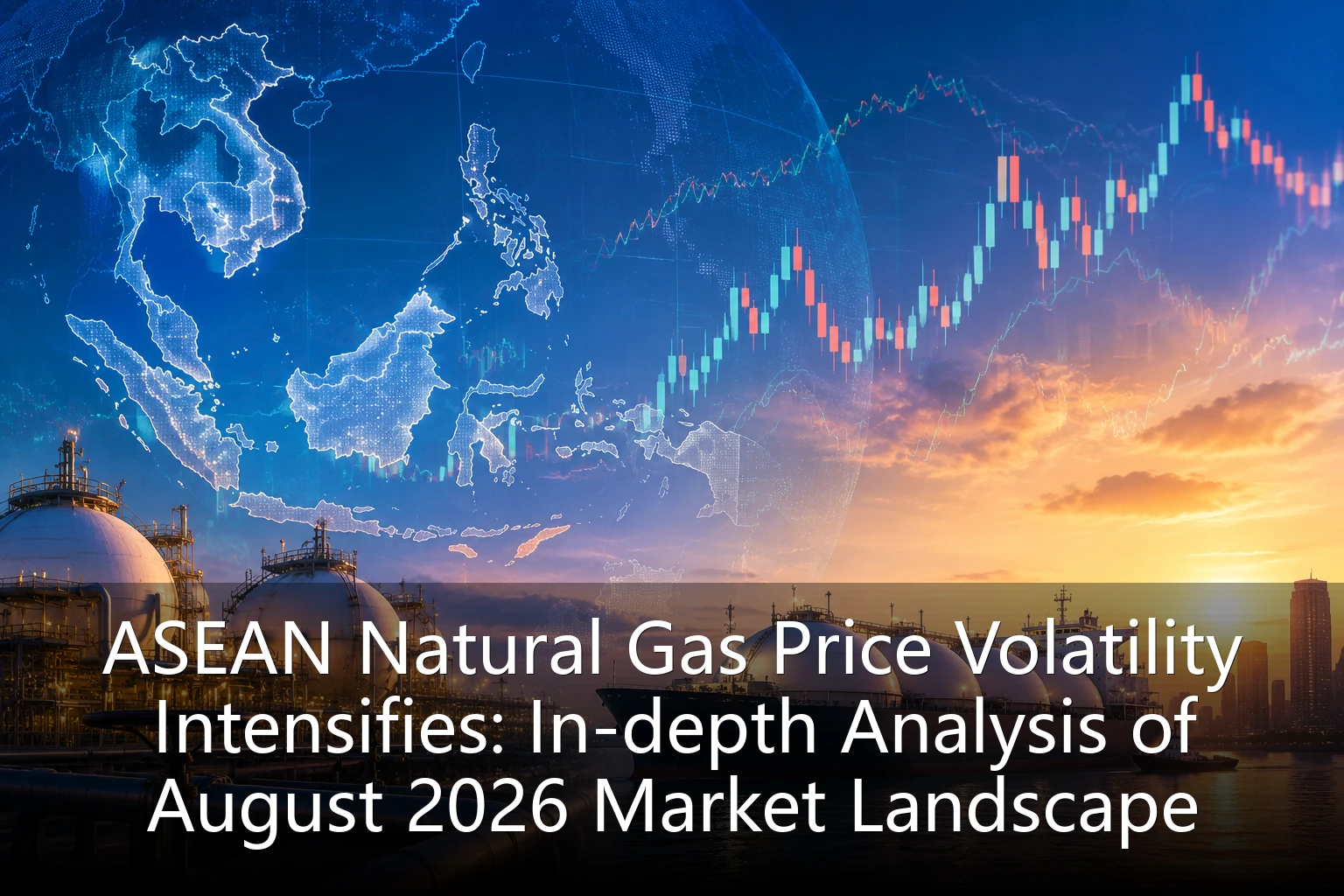
In August 2026, the ASEAN region's natural gas market exhibited unprecedented volatility, with price movements affecting global energy markets. As one of the world's fastest-growing energy consumption regions, ASEAN countries' demand for natural gas continues to rise, while complex changes on the supply side make market prices difficult to predict. This article provides an in-depth analysis of the current price dynamics, supply-demand structure, and future trends in the ASEAN natural gas market, offering investors comprehensive market insights.
Recent Natural Gas Price Trend Analysis
According to the latest data from ASEAN Global Investment Network, in early August 2026, natural gas prices in the ASEAN region showed an upward trend with fluctuations. Taking Indonesia's LNG export benchmark price as an example, it reached $18.75 per million British thermal units on August 10, an increase of approximately 12% from early July and about 23% from the same period last year. This price trend is basically consistent with the global natural gas market, but the fluctuation range in the ASEAN region is more severe.
The main factors causing this price volatility include:
- Extreme hot weather led to surging demand for air conditioning and refrigeration, increasing natural gas consumption
- Global LNG supply tensions, especially limited exports from Australia and the United States
- Geopolitical factors, particularly tensions in the Strait of Hormuz
- Accelerated transition from coal to natural gas in the power generation sector across ASEAN
Notably, there are significant differences in natural gas prices among ASEAN countries. Singapore, as the regional natural gas trading center, experiences more severe price fluctuations; while production countries like Indonesia and Malaysia are relatively stable, but export-oriented countries have stronger price linkage with international markets.
Key Factors Affecting the ASEAN Natural Gas Market
Geopolitical Factors
In 2026, the situation in the Middle East remained tense. The Strait of Hormuz, as the world's most important channel for oil and gas transportation, directly affects global energy supply security. In early August, increased military activities near the Strait of Hormuz intensified market concerns about supply disruptions, pushing up prices for various energy sources including natural gas.
Meanwhile, the ongoing impact of the Russia-Ukraine conflict continues to unfold, with Europe's high demand for LNG intensifying competition in the global LNG market, indirectly affecting ASEAN's natural gas supply and prices.
Seasonal Demand Changes
The impact of seasonal factors on natural gas prices was particularly evident in the summer of 2026. The ASEAN region experienced historic high temperatures, with multiple countries breaking temperature records, leading to significant increases in demand for air conditioning and refrigeration electricity. According to ASEAN Energy Center data, natural gas power generation demand in the ASEAN region grew by approximately 18% year-on-year in July-August 2026, far exceeding expectations.
Additionally, the early end of the rainy season in Southeast Asia led to decreased hydropower generation, forcing power generation companies to increase natural gas use, further driving up demand.
Energy Transition Process
ASEAN countries are accelerating energy transition, reducing dependence on coal and shifting to cleaner natural gas. Countries like Vietnam and the Philippines have announced plans to close old coal-fired power plants and instead build natural gas power facilities. This structural change has increased long-term demand for natural gas, supporting price trends.
However, the rapid development of renewable energy also imposes certain constraints on the natural gas market. The increase in solar and wind power capacity, especially in Thailand and Indonesia, has partially alleviated power supply pressure, but demand growth for natural gas still exceeded expectations.
Natural Gas Market Supply and Demand Conditions
Supply Side Changes
From a supply perspective, the natural gas production landscape in the ASEAN region is changing. Indonesia and Malaysia, as traditional natural gas production powers, maintain stable output, but emerging gas-producing countries like Laos and Myanmar are beginning to contribute more supply. According to ASEAN Energy Bureau statistics, total natural gas production in the ASEAN region increased by approximately 5% year-on-year in the first half of 2026, but still cannot meet the rapid growth in demand.
In the LNG market, Australia and the United States, as major global LNG exporters, have slowed the pace of capacity expansion, combined with some facility maintenance, leading to global LNG supply tensions. Traditional importers like Japan and South Korea have increased purchases from the ASEAN region, intensifying regional competition.
Demand Side Analysis
On the demand side, the power sector remains the main consumer of natural gas. With economic development and population growth in ASEAN countries, electricity demand continues to rise. Natural gas power generation has become the preferred choice for many countries due to its relatively clean and flexible characteristics.
The industrial sector is the second largest area of natural gas consumption. Energy-intensive industries such as chemicals, steel, and cement maintain stable growth in demand for natural gas. Particularly in Thailand and Malaysia, the development of industrial parks has driven increased natural gas consumption.
Residential and commercial natural gas consumption is also growing, but accounts for a relatively small share. In higher-income countries like Singapore and Brunei, residential natural gas consumption growth is more significant.
Impact of Natural Gas Prices on ASEAN Economies
Price fluctuations in natural gas have different impacts on ASEAN economies. For natural gas importing countries like Singapore, Thailand, and the Philippines, rising prices increase energy import costs, push up inflationary pressures, and hinder economic growth. According to ASEAN Economic Research Institute data, a 10% increase in natural gas prices could lead to a GDP growth decline of approximately 0.2-0.3 percentage points in these countries.
For natural gas exporting countries like Indonesia, Malaysia, and Brunei, rising prices bring increased export revenue, helping to improve trade balance and fiscal conditions. However, these countries also face pressure to align domestic natural gas prices with international markets, which may trigger domestic energy price increases and social issues.
Energy-intensive industries are directly affected. Rising production costs in industries such as chemicals, steel, and cement may affect international competitiveness. Some companies have begun considering energy alternatives or improving energy efficiency to cope with cost pressures.
Natural Gas Market Opportunities Investors Should Focus On
Upstream Investment Opportunities
The ASEAN region still has significant potential for natural gas exploration and development. Particularly in the South China Sea, Myanmar waters, and eastern Indonesian waters, where resource exploration is relatively low, providing opportunities for investors. At the same time, traditional non-gas-producing countries like Laos and Cambodia are also attracting foreign investment to develop natural gas resources.
LNG infrastructure investment is also an important opportunity. With the growth of LNG trade, demand for receiving terminals, regasification facilities, and storage and transportation infrastructure is increasing. Countries like Indonesia, Vietnam, and Thailand are planning new LNG receiving terminal projects, providing opportunities for investor participation.
Midstream and Downstream Investment Opportunities
The natural gas power generation sector offers broad investment prospects. ASEAN countries have strong electricity demand growth, while new coal-fired power plants face environmental pressure, making natural gas power generation an ideal choice. Particularly in Java Island Indonesia, northern Vietnam, and central Thailand, demand for natural gas power projects is strong.
Natural gas distribution network construction also deserves attention. The city gas market in ASEAN countries is in a rapid development stage, especially with accelerated urbanization in Indonesia, the Philippines, and Vietnam, driving growth in residential and commercial natural gas consumption.
Financial Derivatives Investment
Natural gas futures and options markets provide investors with risk management tools. As the degree of marketization of natural gas in the ASEAN region improves, natural gas futures trading is becoming increasingly active. Investors can participate in the futures market to hedge against price fluctuation risks or for speculative gains.
Conclusion: Future Outlook for the ASEAN Natural Gas Market
Looking ahead, the ASEAN natural gas market will continue to show strong supply and demand. With accelerated energy transition and economic development, natural gas demand will maintain growth. However, challenges on the supply side cannot be ignored, including resource depletion, geopolitical risks, and environmental pressures.
For investors, it is crucial to grasp the structural opportunities in the ASEAN natural gas market. Upstream exploration and development, midstream and downstream infrastructure construction, and financial derivatives markets all deserve attention. At the same time, it is necessary to closely monitor geopolitical changes, energy policy adjustments, and technological innovations to adjust investment strategies in a timely manner.
Overall, as one of the world's fastest-growing energy consumption regions, the ASEAN region's natural gas market is full of opportunities and challenges. Investors need to conduct in-depth research on market dynamics, seize investment timing, and achieve long-term returns in this vibrant market.