ASEAN Energy Market Natural Gas Price Volatility Intensifies: September 2026 Market Landscape and Investment Opportunities
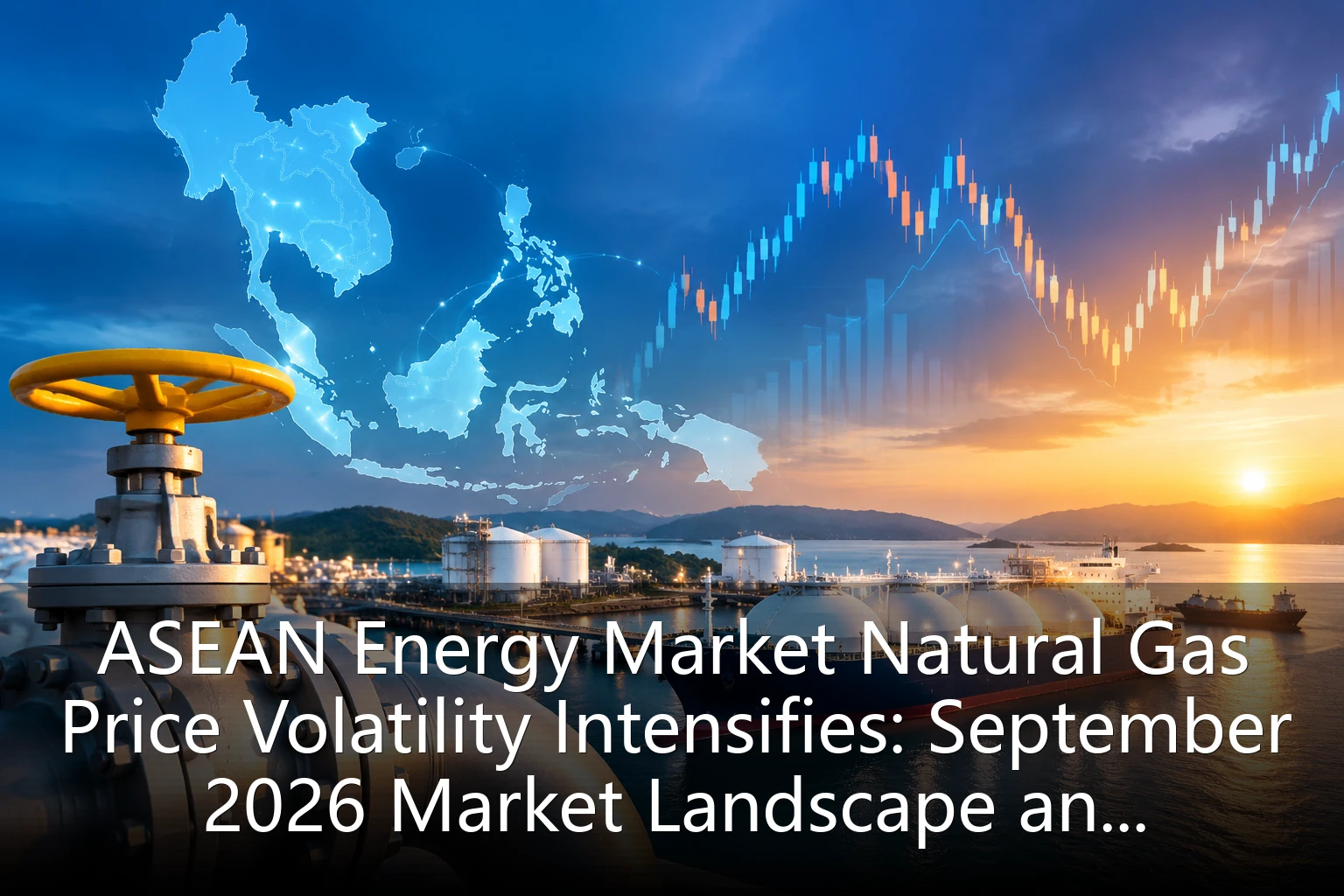
In September 2026, the ASEAN energy market natural gas prices experienced a series of significant fluctuations, a phenomenon that not only reflects the complex changes in the global energy market but also poses new challenges to the economic stability and energy security of ASEAN countries. As an important energy source in the Southeast Asian region, fluctuations in natural gas prices directly affect multiple sectors including power generation, industrial manufacturing, and civilian consumption. This article will conduct an in-depth analysis of the current trends in ASEAN energy market natural gas prices from multiple dimensions such as market dynamics, influencing factors, and investment strategies, providing valuable references for investors and decision-makers.
Natural Gas Market Price Dynamics and Current Situation
Since entering September 2026, the ASEAN energy market natural gas prices have shown significant volatility. According to the latest data, spot prices for liquefied natural gas (LNG) in the Southeast Asian region have increased by about 8% compared to the previous month, reaching $18.5 per million British thermal units (MMBtu), the highest level this year. This price level has increased by nearly 15% since the beginning of the year, showing strong demand and tight supply in the natural gas market.
Specifically, natural gas price increases in major consuming countries such as Singapore, Malaysia, and Thailand have been particularly significant. Singapore's natural gas futures prices have risen for three consecutive weeks in September, with a cumulative increase of over 10%. Meanwhile, as major natural gas producing countries, domestic price increases in Indonesia and Malaysia have been relatively smaller, but export prices have also shown an upward trend, reflecting the overall supply and demand tightness in the global natural gas market.
Notably, the power sector is the main area of natural gas consumption, accounting for about 40% of the total natural gas consumption in the ASEAN region. With the continuous growth in electricity demand, especially driven by high-temperature weather, the demand for natural gas from power generation companies has increased significantly, further pushing up market prices. At the same time, the proportion of natural gas power generation in the ASEAN energy structure has been rising annually, from about 15% in 2016 to nearly 25% in 2026, which makes the impact of natural gas price fluctuations on the power market more significant.
Key Factors Affecting ASEAN Energy Market Natural Gas Prices
The fluctuations in ASEAN energy market natural gas prices are comprehensively influenced by multiple factors, mainly including the following aspects:
- Changes in Global Supply and Demand Structure: In 2026, the supply and demand relationship in the global natural gas market continues to be tight. On one hand, the economic recovery in major consuming countries in Europe and Asia has driven natural gas demand growth; on the other hand, the ongoing Russia-Ukraine conflict continues to affect Russian natural gas supply, while although US LNG export capacity has increased, it still cannot fully fill the supply gap. This global supply and demand tension has been directly transmitted to the ASEAN market, pushing up natural gas prices.
- Geopolitical Factors: The tense situation in the Middle East has a significant impact on the global energy market. The Strait of Hormuz, as one of the world's most important oil and gas transportation channels, its security status directly affects energy supply stability. Recent escalation of regional conflicts has led to increased transportation insurance costs, further pushing up natural gas prices.
- Climatic Factors: During the summer of 2026, the Southeast Asian region experienced rare high temperatures, leading to a surge in air conditioning electricity demand, which in turn increased natural gas power generation demand. At the same time, abnormal weather has also affected the stable supply of renewable energy such as hydropower, increasing dependence on natural gas.
- Energy Transition Policies: ASEAN countries are accelerating the promotion of energy transition, reducing dependence on coal and increasing the proportion of natural gas in the energy structure. Although this policy orientation is conducive to reducing carbon emissions, it has also increased demand for natural gas, creating upward pressure on prices.
- Infrastructure Limitations: The construction of natural gas pipeline networks and LNG receiving stations within ASEAN is relatively lagging, limiting the region's resource allocation capacity and leading to supply-demand imbalances in local areas, exacerbating price fluctuations.
Impact of Natural Gas Price Fluctuations on ASEAN Countries
Fluctuations in natural gas prices have had a profound impact on the economic development and social stability of ASEAN countries, mainly reflected in the following aspects:
Impact on the Power Industry
The power industry is the main bearer of natural gas price fluctuations. The proportion of natural gas power generation in the ASEAN power structure has been continuously increasing, currently accounting for about 25% of total power generation. Rising natural gas prices directly lead to increased power generation costs, which are then passed on to terminal electricity prices. In the second quarter of 2026, many ASEAN countries have raised electricity prices, with an average increase of 8%-12%, with Thailand and Singapore showing the most significant electricity price increases.
The increase in electricity prices has created dual pressures on industrial production and residential life. On one hand, high electricity prices have increased production costs for industrial enterprises, weakening the international competitiveness of ASEAN countries' manufacturing industry; on the other hand, rising residential electricity costs have also increased the living burden, which is more significant among low-income groups. To alleviate this pressure, some governments have had to provide subsidies, increasing fiscal burdens.
Impact on Macroeconomy
As an important energy source and industrial raw material, fluctuations in natural gas prices have a broad impact on the macroeconomy of ASEAN countries. Rising energy prices lead to increased inflationary pressure. In August 2026, the inflation rate in the ASEAN region reached 4.2%, the highest in nearly three years, with rising energy prices being one of the main drivers.
At the same time, rising production costs in energy-intensive industries such as chemicals, steel, and cement may lead to slower investment in these industries, affecting economic growth. The latest report from the International Monetary Fund (IMF) points out that for every 10% increase in energy prices, the GDP growth rate of ASEAN countries may decrease by 0.2-0.3 percentage points.
Impact on Energy Security
The continuous rise and fluctuations in natural gas prices have intensified energy security challenges for ASEAN countries. On one hand, countries with high import dependence face greater energy cost pressures; on the other hand, price fluctuations increase the difficulty of energy planning, which is not conducive to the formulation and implementation of long-term energy policies.
To address this challenge, ASEAN countries are actively taking measures, including: accelerating the development of renewable energy to reduce dependence on natural gas; strengthening regional cooperation to establish a more complete natural gas market mechanism; promoting energy efficiency improvements to reduce energy waste. Although these measures take time to take effect, they help improve the resilience and sustainability of the energy system.
Investment Opportunities and Strategic Recommendations
In the face of fluctuations in ASEAN energy market natural gas prices, investors can seize the following opportunities and adopt corresponding strategies:
Natural Gas Industry Chain Investment Opportunities
- Upstream Exploration and Production: Rising natural gas prices will increase profit margins in upstream exploration and production. Investors can focus on natural gas companies with high-quality resource reserves and efficient production capabilities, especially natural gas enterprises in resource-rich ASEAN countries such as Indonesia, Malaysia, and Myanmar.
- Midstream Infrastructure: Construction of infrastructure such as LNG receiving stations and natural gas pipelines is key to solving regional supply-demand imbalances. With the deepening of energy cooperation among ASEAN countries, there is strong demand for related infrastructure investment, especially in cross-border natural gas pipelines and regional LNG receiving station construction.
- Downstream Application Areas: Downstream application areas such as natural gas power generation, industrial gas use, and city gas will benefit from the growth in natural gas demand. Investors can focus on downstream enterprises with stable customer bases and long-term contract guarantees.
Risk Hedging Strategies
To cope with the risks brought by natural gas price fluctuations, investors can adopt the following hedging strategies:
- Futures Contracts: Use the natural gas futures market for hedging to lock in price risks. Enterprises and investors can establish corresponding positions in the futures market according to their own needs to hedge against the risks of spot market price fluctuations.
- Diversified Investment: Maintain diversification in energy investment, including various energy types such as oil, coal, and renewable energy, to reduce dependence on a single energy type.
- Regional Diversified Investment: Invest in different ASEAN countries to avoid concentrated risks from policy changes or market fluctuations in a single country.
Long-term Investment Trends
In the long run, energy transition will reshape the ASEAN energy market landscape. Investors should pay attention to the following long-term trends:
- Coordinated Development of Natural Gas and Renewable Energy: As the proportion of renewable energy gradually increases, the importance of natural gas as a transitional energy and peak-shaving energy will increase. Enterprises that can achieve coordinated development of natural gas and renewable energy have long-term investment value.
- Digitalization and Intelligence: The application of digital technology in the energy sector will improve market efficiency and transparency. Investing in technology companies in fields such as energy data analysis and smart grids will yield long-term returns.
- Clean Energy such as Hydrogen: With the advancement of carbon neutrality goals, clean energy such as hydrogen will迎来 development opportunities. The abundant renewable energy resources in ASEAN countries provide favorable conditions for green hydrogen production, and the related industrial chain has huge development potential.
Future Outlook
Looking ahead, ASEAN energy market natural gas prices may continue to be affected by multiple factors, showing a trend of fluctuating upward. In the short term, geopolitical risks, extreme weather events, and seasonal demand changes may continue to cause price fluctuations; in the medium to long term, energy transition processes, infrastructure construction, and deepening regional cooperation will reshape the market landscape.
For ASEAN countries, strengthening energy cooperation, improving market mechanisms, and promoting energy transition are key to coping with natural gas price fluctuations. At the same time, improving energy efficiency, developing renewable energy, and strengthening energy reserves are also important ways to enhance energy security.
For investors, while seizing investment opportunities in the natural gas industry chain, they should closely pay attention to policy changes, market dynamics, and technological innovation, adopt flexible and diverse investment strategies, and obtain long-term stable returns under the premise of controllable risks. With the continuous maturation of the ASEAN energy market and the deepening of regional cooperation, the ASEAN energy market will provide investors with broader development opportunities.