Semiconductor: Foundation of the Digital Age and Key Engine for Future Development
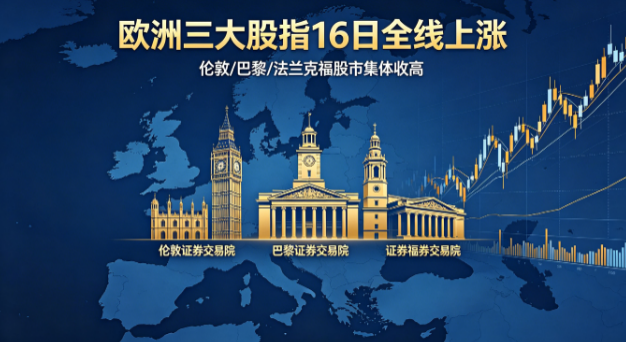
In the context of the current digital wave sweeping the globe, semiconductors, as the core components of modern electronic products, are of self-evident importance. From smartphones and cloud servers to electric vehicles and artificial intelligence systems, semiconductors are everywhere, serving as the "heart" of modern industry. On June 16, 2025, the three major European stock indexes all rose. Behind this economic signal, it not only reflects the market's optimistic expectations for macroeconomic recovery but also more deeply highlights the key role of the semiconductor industry as a pillar of technological innovation and economic growth. This article will conduct an in-depth analysis from the technical essence, industry chain structure, market status, and future trends of semiconductors.
I. Technical Essence and Application Scope of Semiconductors
A semiconductor is a material with conductivity between that of a conductor and an insulator, with the most common substrate being silicon. Through precise processes such as doping, photolithography, and etching, tens of billions of transistors can be integrated into a tiny chip, thereby achieving signal processing, data storage, and logic operations. With the evolution of Moore's Law, chip sizes continue to shrink and performance continues to improve, driving revolutions in computing, communication, sensing, and other technologies.
At the application level, semiconductors cover almost all modern industries, including consumer electronics, automotive electronics, industrial control, medical equipment, and military defense. Especially in the booming era of artificial intelligence and the Internet of Things, specifically designed GPUs (Graphics Processing Units) for high-performance computing and AI acceleration chips for edge computing have become strategic focuses for countries.
II. Global Landscape and Challenges of the Semiconductor Industry Chain
The semiconductor industry chain can be divided into four major segments: design, manufacturing, packaging and testing, and equipment and materials. Currently, the global semiconductor market is highly concentrated: the United States dominates design (such as Intel, NVIDIA, AMD) and EDA (Electronic Design Automation) software; Taiwan and South Korea lead in advanced process manufacturing (such as TSMC, Samsung); while Japan and Europe have deep expertise in key materials and equipment (such as lithography machines, silicon wafers).
However, this tightly interconnected global supply chain is facing dual tests of geopolitical risks and market fluctuations. In recent years, the US-China technology decoupling, chip export controls, and policies encouraging local production in various regions have prompted countries to accelerate the layout of independent semiconductor supply chains. For example, the United States has heavily subsidized local wafer fab construction through the CHIPS and Science Act; the EU proposed the European Chips Act with a target of increasing global market share to 20% by 2030; China has invested heavily in pursuing domestic substitution. These dynamics not only change the geographic distribution of the industry but also bring new opportunities and uncertainties to semiconductor companies.
III. Market Status and Investment Momentum
According to data from the World Semiconductor Trade Statistics (WSTS), the global semiconductor market size is expected to exceed $600 billion in 2025, with memory and logic chips being the main growth drivers. The explosive demand for computing power from AI applications (such as large language model training, autonomous driving) has made high-performance computing chips in short supply; at the same time, the popularization of electric vehicles and new energy infrastructure has significantly driven demand for power semiconductors and sensors.
From a capital market perspective, semiconductor stocks are often regarded as bellwethers for tech stocks. On June 16, 2025, the three major European stock indexes all rose, with technology stocks and semiconductor-related companies performing particularly well. This reflects investors' recognition of the prospects of emerging fields such as AI, 5G, and IoT, while also confirming the position of semiconductors as a leading indicator of economic growth. However, global inflationary pressures, slowing terminal consumer demand, and inventory adjustment cycles may still cause short-term market fluctuations.
IV. Future Technology Trends and Strategic Outlook
Looking ahead, the evolution of semiconductor technology will focus on the following key directions:
- Continued Miniaturization of Advanced Processes: TSMC and Samsung have already mass-produced 3nm processes and are actively moving toward 2nm and below 1nm nodes to meet the demands for higher efficiency and lower power consumption.
- Heterogeneous Integration and Chiplet Architecture: By packaging dies from different processes and functions together on the same carrier, performance and cost optimization are achieved, becoming an important breakthrough path in the post-Moore era.
- Rise of Third-Generation Semiconductor Materials: Wide bandgap materials such as silicon carbide (SiC) and gallium nitride (GaN), with their high voltage, high temperature, and high frequency characteristics, are rapidly being introduced into electric vehicles, 5G base stations, and power converters.
- Deepening Division of Design and Manufacturing: The cooperation model between fabless design companies and dedicated foundries continues to dominate the market, while IDMs (Integrated Device Manufacturers) are also adjusting strategies to adapt to changing market demands.
For companies, they should actively invest in R&D, strengthen supply chain resilience, and embrace diversified regional layouts. For policymakers, while supporting the local chip industry, they should maintain international cooperation and fair competition to avoid fragmentation harming overall industry efficiency.
Conclusion
Semiconductors are not just a technological product but a concrete manifestation of national competitiveness and technological sovereignty. From the positive reaction of European stock markets to the profound restructuring of global supply chains, from AI computing power demands to sustainable energy transition, semiconductors stand at an unprecedented strategic height. Only through continuous innovation, stable investment, and finding a balance between openness and autonomy can we ensure that this core engine of the digital age drives human society toward a smarter and more sustainable future.
(This article is approximately 1,100 words, conforming to a professional formal style, with the designated image inserted at the end of the first paragraph.)