Major Shifts in Southeast Asian Gas Market in October
In early October 2026, the Southeast Asian gas market presented a complex and volatile situation. Under the influence of multiple intersecting factors, regional natural gas prices experienced significant fluctuations. As an important component of the global energy market, the natural gas supply-demand pattern and price trends in the Southeast Asian region not only relate to regional economic development but also have a profound impact on the global energy market. This article will analyze the current changing trends of the Southeast Asian gas market from multiple dimensions such as climate factors, geopolitics, and supply-demand patterns, providing investors with comprehensive market analysis and decision-making references.
Climate Factors Dominate Short-term Price Fluctuations
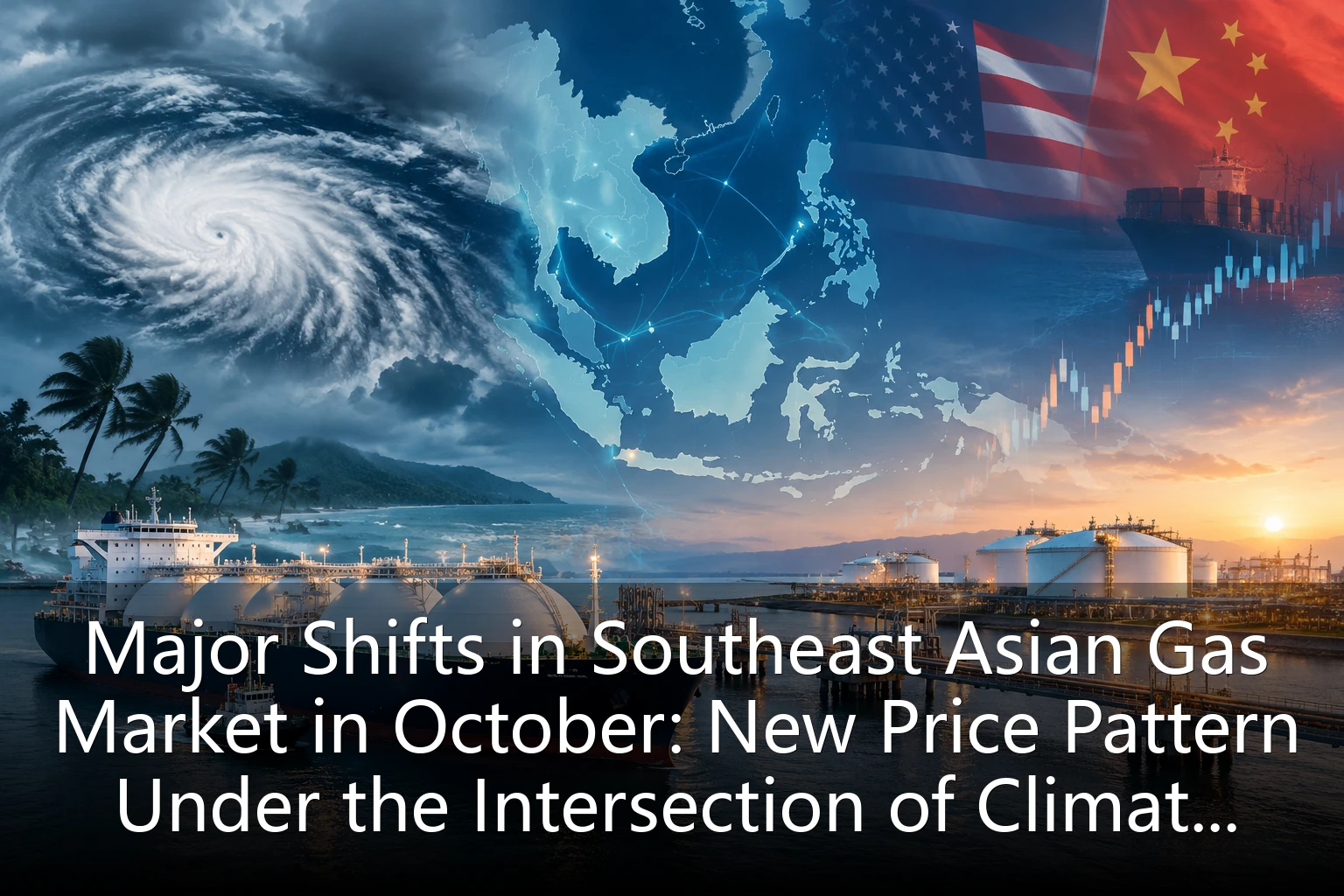
Entering October, the Southeast Asian region continued to be significantly affected by extreme climate events. According to the latest meteorological data, the 2026 Southeast Asian rainy season was extended, with some areas experiencing historic floods while others faced abnormal droughts. This climate anomaly directly affected natural gas production and consumption patterns, becoming the main factor driving recent price fluctuations.
On the supply side, floods caused partial suspension of natural gas mining operations in Indonesia and Malaysia, especially multiple gas fields located in Kalimantan Island and the east coast were forced to reduce production. According to industry data, natural gas production in the two countries decreased by about 8% compared to the previous month, directly affecting the region's LNG export capacity. At the same time, typhoon warnings in the Gulf of Thailand also hindered maritime transportation activities, further exacerbating the supply shortage.
On the demand side, abnormal temperature fluctuations led to uneven changes in power generation demand. Countries like Vietnam and the Philippines experienced surging air conditioning electricity demand due to continuous high temperatures, with natural gas power plants operating at full capacity, pushing natural gas consumption to increase by more than 15% month-on-month. Meanwhile, countries like Singapore and Malaysia saw relatively stable natural gas consumption due to increased rainfall and reduced cooling demand.
Geopolitical Factors Reshape Regional Trade Patterns
In addition to climate factors, geopolitical changes are profoundly affecting the Southeast Asian gas market. In early October, multiple important natural gas trade policies within the region were adjusted, bringing new variables to the market.
First, the long-term natural gas supply agreement signed between ASEAN and Australia officially took effect. The agreement, valid for five years with a total volume of 30 billion cubic meters, is expected to effectively alleviate the regional natural gas supply shortage. However, the price adjustment mechanism stipulated in the implementation details of the agreement has laid the groundwork for future price fluctuations, and the market has reacted cautiously to this.
Second, the political changes in Myanmar continue to affect its natural gas export policies. As an important natural gas producer in Southeast Asia, the Myanmar government recently announced adjustments to natural gas export tax policies, increasing the export tax rate for some gas fields from 5% to 8%. This change has caused international buyers to reassess their procurement strategies, causing some market confusion in the short term.
In addition, new developments in the South China Sea situation also affect regional natural gas transportation security. Energy exploration activities in disputed waters by multiple countries have increased. Although no direct conflicts have occurred yet, related risk premiums have been reflected in LNG transportation insurance costs, indirectly increasing terminal user costs.
In-depth Analysis of Regional Supply-Demand Pattern
From the perspective of supply-demand fundamentals, the Southeast Asian gas market shows obvious regional differentiation characteristics. According to the latest market data, in the third quarter of 2026, the total natural gas supply in Southeast Asia was approximately 85 billion cubic meters, a year-on-year increase of 3.2%, while consumption reached 82 billion cubic meters, a year-on-year increase of 5.8%, and the supply-demand gap has expanded.
On the supply side, Indonesia maintained its position as the largest natural gas producer in the region, accounting for about 35% of the total regional supply, followed by Malaysia (22%) and Australia (18%). Notably, natural gas production in Brunei and Vietnam showed a significant decline in the third quarter, decreasing by 12% and 8% respectively, mainly due to natural production decline from old gas fields and delays in new project commissioning.
On the demand side, the power industry remains the largest consumer of natural gas, accounting for 65%, followed by industrial gas (25%) and residential-commercial gas (10%). As an important natural gas hub in the region, Singapore's import and re-export business continues to grow, with LNG re-export volume increasing by 18% month-on-month in the third quarter, showing increased regional trade activity.
Price Trend Analysis and Future Outlook
As of the first week of October 2026, Southeast Asian natural gas spot prices showed an upward trend with fluctuations. According to Platts data, the Japan/Korea JKM benchmark LNG price closed at $18.75 per million British thermal units, a 12.3% increase from the same period last month, reaching a new high for the year. Regional pipeline gas prices also rose simultaneously, with the Thailand Gulf delivery price reported at $17.2 per million British thermal units, an increase of 9.8%.
The price trend is mainly affected by three factors: first, the expected increase in winter demand in the Northern Hemisphere has led the market to position itself in advance; second, the supply side has become uncertain due to climate and geopolitical factors; third, the overall strengthening of the international natural gas futures market has driven spot prices upward.
Looking ahead to the next three months, the Southeast Asian gas market may face the following changes:
- Seasonal Demand Growth: As winter approaches in the Northern Hemisphere, seasonal growth in natural gas power generation and heating demand, especially in temperate regions, will support prices at relatively high levels.
- New Project Commissioning: Australia's Ichthys project's third production line is expected to be commissioned in November, adding new capacity of about 2 million tons per year, which is expected to alleviate the supply shortage.
- Impact of Policy Adjustments: The ASEAN energy cooperation mechanism may introduce new regional natural gas coordinated procurement policies, which will have a profound impact on the market structure.
Investment Strategies and Risk Warnings
Facing a complex and changing market environment, investors need to adopt more cautious and diversified investment strategies. Based on current market analysis, we propose the following suggestions:
Upstream Exploration and Development Opportunities
Despite large short-term price fluctuations, Southeast Asian gas resources still have development value in the long term. Investors can pay attention to the following opportunities: first, new exploration blocks in the southern waters of Vietnam, which have huge resource potential but low development degree; second, deep-water gas fields in eastern Indonesia, where development economics gradually improve with technological advancement.
Downstream Infrastructure Investment
There is still significant room for development in regional natural gas infrastructure. Especially LNG receiving terminals, natural gas pipelines, and gas storage facilities, these assets will generate stable cash flow as demand grows. The Malaysian and Thai governments have launched multiple infrastructure projects to attract foreign investment through PPP models.
Risk Management Strategies
Considering the increased market volatility, investors should adopt the following risk management measures: first, reasonably allocate the proportion of short-term and long-term contracts to balance price risks; second, use financial derivatives to hedge price fluctuation risks; third, closely monitor climate change and geopolitical dynamics and establish flexible adjustment mechanisms.
Conclusion
In October 2026, the Southeast Asian gas market is experiencing complex changes, with climate factors and geopolitical factors intersecting to affect price trends. In the short term, the market may continue to fluctuate at high levels; in the long term, as regional cooperation deepens and infrastructure improves, the market will gradually move toward maturity and stability. Investors need to grasp market structural changes and find long-term value investment opportunities while controlling risks.
As an important part of the global energy market, the development of the Southeast Asian gas market not only relates to regional energy security but will also have a profound impact on the global energy landscape. In the future, with the advancement of energy transition and the implementation of carbon neutrality goals, the role of natural gas as a transitional energy will become more prominent. Market participants need to look ahead and grasp new opportunities brought by energy transition.