
Global Market Turmoil: Hopes of US-Iran Peace Intertwined with UK Political Upheaval, Forex Markets Experience Roller-Coaster Swings
Keywords
US Dollar Index, British Pound, US-Iran Peace Agreement, Resignation of British Prime Minister, Andy Burnham, Canadian Inflation, Japanese Yen, Euro, Market Volatility
Introduction: One Batch of News, Two Divergent Trends – Rationality and Sentiment in Markets
If you opened a financial app this morning to check forex market performance, you might think you were seeing things. The US Dollar Index edged up 0.2%, seemingly moving modestly, yet two opposing forces lurked beneath the surface: on one hand, signs of peace emerged from the Middle East; on the other, the British Prime Minister suddenly announced their departure from 10 Downing Street. Within just a few hours, investors swiftly toggled between risk-off and risk-on sentiment. How could a single market react so dramatically to geopolitical tensions and domestic political shifts simultaneously? Let us break down the dynamics step by step.
I. The "Peace Dividend" Behind the Strengthening US Dollar
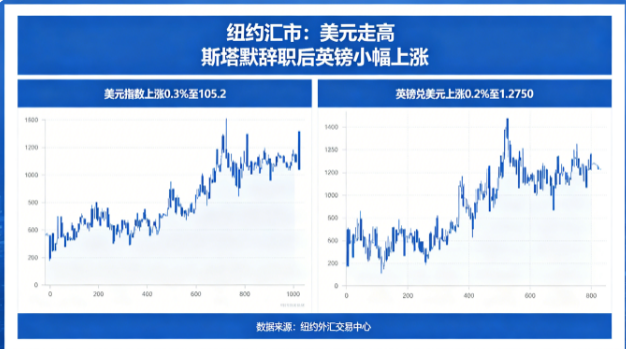
First, the US dollar. A 0.2% gain in the spot US Dollar Index may seem unremarkable, yet it carries profound implications amid the current geopolitical landscape. After an all-night round of negotiations with the United States, Iran signaled "major breakthroughs," with both sides aiming to finalize a peace agreement within two months. Upon news of a potential end to hostilities, the yield on the US 10-year Treasury bond jumped roughly five basis points to 4.51%.
Here lies the core logic: diminished war fears cool market demand for safe-haven assets, prompting capital to flow out of bonds and into riskier investments. Theoretically, this should weaken the US dollar – so why did it rise instead? The reasoning is nuanced. While US-Iran detente eases geopolitical risks, it unexpectedly bolsters market confidence in the restoration of US-led global order. Investors anticipate that once a peace accord is signed and Middle Eastern tensions subside, global trade and energy supply chains will operate more smoothly, solidifying the US dollar’s status as the world’s primary settlement currency – a positive premium stemming from the peace dividend. Furthermore, US economic data remains relatively robust, leaving the Federal Reserve under little immediate pressure to cut rates, allowing the dollar to consolidate its strength.
Interestingly, rising hopes for peace have quietly lifted inflation expectations. Should energy prices decline amid de-escalation in the Middle East, central banks worldwide would gain more leeway to keep interest rates elevated, delivering additional support to the US dollar.
II. A Sudden UK Leadership Shakeup: Starmer Resigns, Burnham Poised to Take Office
Compared with the mild uptick in the US dollar, the British Pound’s performance resembled a thriller drama. GBP/USD plunged 0.4% in early trading as investors feared the UK would descend into endless political chaos. Yet the market mood staged a dramatic U-turn shortly after Keir Starmer announced his resignation: the pound recovered all losses and edged up 0.1% to 1.3243. What lies behind this shift?
The key factor is the removal of uncertainty. Starmer’s resignation did not trigger panic like previous political crises, as his likely successor, Andy Burnham, commands broad support within the party, and all stakeholders have reached a consensus to complete a smooth power transfer. Should Burnham take office, he will become the UK’s seventh prime minister in a decade. While this statistic sounds alarming, markets breathed a sigh of relief. Following the volatility under Truss, Sunak and recent political unrest, investors fear not leadership changes themselves, but prolonged ambiguity about when power will shift and whether new administrations will trigger renewed chaos.
Burnham holds a relatable public image and pragmatic policy stances. Markets widely expect him to stabilize domestic politics first before tackling fiscal deficits and public service reforms. This predictability is precisely what foreign exchange markets crave. Combined with tentative signs of recovery in the UK economy – including a rebound in services PMI – the pound secured short-term support. That said, long-standing structural headwinds persist for Britain: post-Brexit fallout, stagnant productivity and heavy national debt. Even so, political risk premiums have declined in the near term.
III. Japanese Yen, Canadian Dollar and Euro: Distinct Narratives Amid Widespread Turbulence
Other major currencies each faced their own unique headwinds and drivers.
Japanese Yen
USD/JPY rose 0.2% to 161.58, nearing the 162 threshold. Japanese Finance Minister Satsuki Katayama issued another verbal intervention warning, stating authorities would take appropriate action if necessary. Markets have grown desensitized to such rhetoric, and the yen remains trapped in a depreciation cycle. The critical unresolved question: when will the Bank of Japan actually raise interest rates? Recent mild cooling of Japanese inflation, paired with an uncertain global growth outlook, has left central bank policymakers in a bind. A sustained yen recovery is unlikely in the short run unless the Japanese government launches direct market intervention or the US economy slides into recession.
Canadian Dollar
USD/CAD climbed less than 1% amid choppy trading to hit 1.4161, driven by a surprising inflation print from Canada. Latest data pushed the country’s inflation rate to its highest level in over two years – a development that would typically buoy the loonie, as elevated inflation forces the Bank of Canada to maintain high interest rates. The countervailing downside is Canada’s extreme economic sensitivity to global oil prices: brighter prospects for Middle Eastern peace could push crude prices lower, eroding the loonie’s appeal as an energy-linked currency. Compounded by US economic strength weighing on Canadian export demand, the loonie is caught between inflation-driven bullish factors and oil-related bearish pressures.
Euro
EUR/USD fell 0.4% to 1.1424, marking weak performance among major currencies. Although the European Central Bank has maintained a hawkish stance lately, feeble eurozone growth – particularly persistent contraction in Germany’s manufacturing sector – has sapped investor confidence in the euro. Lingering political risks in France further weighed on sentiment, making the euro one of the weakest major currencies of the day.
Conclusion: Short-Term Volatility Is Normal; Long-Term Trends Depend on Fundamentals
Overall, the forex market’s swings throughout the day were clearly event-driven. Eased war risks from US-Iran peace talks, expectations of rapid political stabilization following the UK leadership transition, and divergent inflation outlooks and monetary policy paths across nations combined to form a complex picture of exchange rate movements.
For retail investors, my advice is straightforward: avoid jumping to hasty conclusions. Will the US-Iran peace agreement be signed as scheduled? Can Burnham halt political and economic instability upon taking office? When will the Bank of Japan act? Time is required to answer all these questions. In the short term, market sentiment is easily swayed by headline news, yet a currency’s long-term trajectory is ultimately determined by national economic fundamentals, productivity growth and policy discipline.
As you close your computer tonight, consider a simple question: if Iran suddenly announces collapsed negotiations tomorrow, or unexpected results emerge from UK general elections, would your asset allocation withstand the shock? Prepare for the worst-case scenarios to seize opportunities amid market volatility.