Switzerland’s Trade Surplus Explodes! The Secrets Behind Doubled May Figures
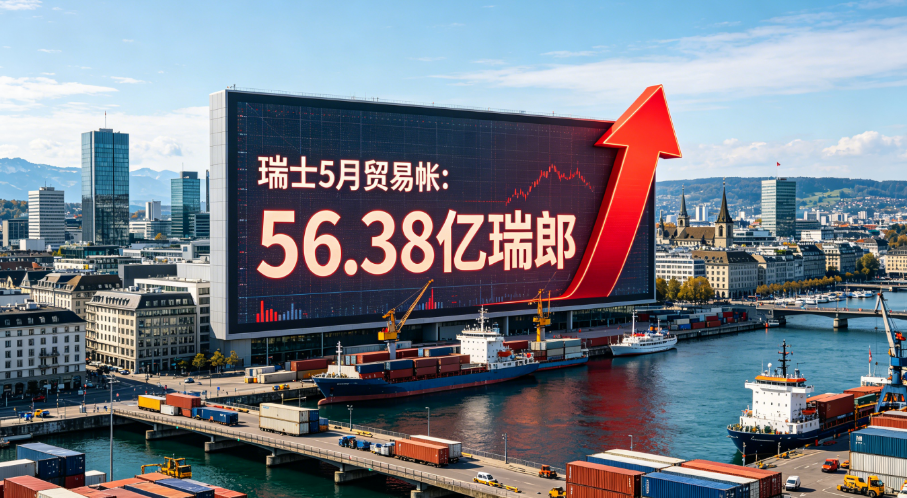
Dear readers, today we’re diving into a seemingly dry yet surprisingly fascinating economic topic: Switzerland’s trade balance. When you see the figure “Switzerland posted a trade surplus of CHF 5.638 billion in May, up from CHF 3.098 billion in April,” your first thought might be, “The number went up—so what?” Hold on as we unpack the full story behind these stats. Far more than just a numerical gap, these figures paint a vivid picture of Switzerland’s economic resilience and shifting global trade dynamics.
What Is a Trade Balance, and Why Does It Matter?
Let’s start with a quick primer. The trade balance measures the gap between a country’s total export and import values over a set period. When exports exceed imports, the result is a trade surplus; the opposite yields a trade deficit. Switzerland’s May surplus of CHF 5.638 billion means the value of goods the nation sold abroad that month outstripped its foreign purchases by exactly that amount.
You may wonder, “What’s so remarkable about simply earning more revenue?” In truth, a sustained trade surplus signals national economic strength—especially for a resource-scarce country renowned for high-end manufacturing and services like Switzerland. Persistent surpluses reflect globally competitive domestic goods and relative stability in the Swiss franc exchange rate. After all, an overly strong franc drives up export prices, which would inevitably shrink the surplus.
The May Surge: A One-Time Blip or Sustained Trend?
Back to the headline numbers: Switzerland’s May trade surplus hit CHF 5.638 billion, surging over 80% from April’s CHF 3.098 billion—almost doubling month-on-month. To put this in perspective: imagine regularly saving 3,000 currency units monthly, then suddenly stashing away 5,600 one month. Naturally, you’d want to know where the extra savings came from.
Simplistically, one might picture Swiss factories ramping up overtime shifts to produce watches, precision instruments, chocolate and Swiss Army knives in May, while import volumes dipped due to weaker demand for foreign goods or raw materials. The reality, however, is far more layered.
Exports: The Twin Growth Engines of Pharmaceuticals and Watchmaking
Switzerland’s two economic pillars—pharmaceuticals & chemicals, and watches & jewellery—likely drove the May export boom. Demand for COVID vaccines and premium pharmaceuticals remains robust worldwide, sustaining steady output from Swiss industry giants Novartis and Roche. Meanwhile, after years of sluggish performance, Swiss watch exports rebounded in May amid a tourism recovery and rising demand from Chinese consumers, creating a mini export peak that fuelled surplus expansion.
Imports: Cheaper Energy and Muted Domestic Demand
Falling import volumes also widened the surplus. Global energy prices stabilised and even declined in May, easing cost burdens for Switzerland, a major energy importer. Additionally, domestic consumers facing inflationary headwinds cut back on purchases of imported goods such as automobiles and electronics, further lowering total import expenditure. Higher exports paired with lower imports naturally ballooned the trade surplus.
The Subtle Dual Role of the Swiss Franc Exchange Rate
At this point, you might ask: “With such an expensive franc, shouldn’t Swiss exports struggle?” The Swiss franc has long functioned as a safe-haven currency, and its theoretical strength should weigh on overseas sales. Swiss firms have adapted by focusing on high-value, irreplaceable products. Take a Patek Philippe watch worth CHF 200,000: buyers will not switch brands solely due to exchange rate fluctuations. This unmatched pricing power lets Swiss manufacturers preserve profit margins even amid a strong domestic currency.
May’s data hints the franc delivered a silver lining for exporters: cheaper imported raw materials and equipment cut production costs, enabling manufacturers to scale up output. Think of a top chef sourcing affordable ingredients yet selling premium dishes at high markups—profit margins widen significantly as a result.
What This Data Means for Ordinary People
Swiss trade statistics may feel distant from daily life, yet they carry meaningful signals. First, a widening surplus signals persistent global appetite for “Made in Switzerland” goods. This bodes well for anyone studying, working or running businesses in Switzerland, as economic prosperity typically translates to more job openings and wage growth.
Second, consumers fond of Swiss watches, chocolate and pharmaceuticals can expect stable pricing in the short term; exchange rate volatility is unlikely to trigger sharp price hikes, thanks to economies of scale. For residents of Switzerland, cheaper imported goods are another welcome side effect of the currency’s strength.
Conclusion: How Long Can Switzerland Stay in Its Economic Comfort Zone?
Overall, Switzerland’s stellar May trade balance stems from three overlapping factors: resilient high-end manufacturing, favourable global demand patterns, and supportive exchange rate conditions. This widening surplus has insulated Switzerland’s economy amid broader European slowdowns in the short run. Nevertheless, significant risks linger: global inflationary pressures and escalating geopolitical tensions could erode overseas demand at any time, while further franc appreciation would create headwinds for exporters.
Next time you encounter the figure “CHF 5.638 billion Swiss trade surplus for May,” treat it as an economic traffic light: the green signal confirms Switzerland’s trade machine is operating at full capacity. Savvy observers must remain vigilant for flickering lights triggered by market shocks. After all, no nation holds an unbeatable position indefinitely on the volatile global economic chessboard—but for this May at least, Switzerland delivered an enviable economic report card.