Current Landscape and Future Outlook of the Semiconductor Industry: Analysis of Technology Innovation and Market Trends
Keywords: Semiconductor, Chip, Technology Innovation, Industry Chain, Market Trends, Artificial Intelligence, Advanced Process
Introduction
As the core foundation of the modern electronics information industry, the technological evolution and market trends of semiconductors not only profoundly affect the rhythm of the global economy but also directly relate to national strategic security and technological competitiveness. In recent years, accompanied by the explosive growth of emerging applications such as AI, 5G communications, high-performance computing, and electric vehicles, the semiconductor industry has experienced unprecedented demand expansion and cyclical adjustments. According to the latest data from the Hong Kong Stock Exchange Semiconductor Industry Index, the index showed a clear upward trend in the first half of 2026, reflecting strong market confidence in the long-term growth potential of semiconductors.
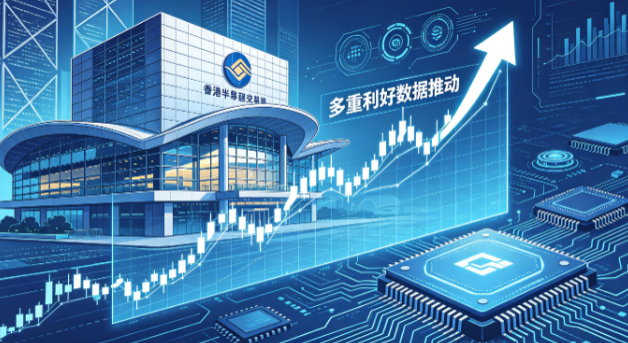
This chart clearly outlines the steady upward curve of the semiconductor index since the beginning of the year, driven by multiple factors including technological breakthroughs, strong downstream demand, and gradually stabilizing supply chains. This article will analyze the current development landscape of the semiconductor industry from three dimensions: technology innovation, supply chain restructuring, and market demand structure, and look ahead to possible future evolution paths.
I. Technological Breakthroughs and Innovation Drivers in the Semiconductor Industry
In terms of advanced processes, leading companies such as TSMC and Samsung Electronics have successfully mass-produced 3nm processes and are actively advancing R&D for 2nm and below nodes. The mature application of extreme ultraviolet (EUV) lithography technology has led to continuous increases in transistor density and significant reductions in power consumption. Meanwhile, the introduction of gate-all-around (GAA) transistor structures has injected new momentum into the continuation of Moore's Law.
In materials science, third-generation semiconductor materials such as silicon carbide (SiC) and gallium nitride (GaN) are accelerating their penetration into the power semiconductor market. These wide bandgap materials offer higher voltage tolerance, heat resistance, and switching frequency characteristics, making them particularly suitable for electric vehicle inverters, 5G base station RF amplifiers, and high-efficiency power conversion systems. Electric vehicle manufacturers like Tesla have already taken the lead in adopting SiC MOSFETs, significantly improving charging efficiency and driving range.
In addition, the rise of AI-specific chips (AI ASICs) and neuromorphic computing chips is rewriting traditional design logic. Through hardware-software co-optimization, these chips can perform deep learning inference tasks with extremely low power consumption, thereby driving a revolution in edge computing and IoT devices.
II. Global Supply Chain Restructuring and Regionalization
The escalating US-China technology competition has forced governments to reassess the resilience and security of the semiconductor supply chain. The US CHIPS and Science Act and the EU European Chips Act have been successively introduced, investing hundreds of billions of dollars in subsidies to strengthen local chip manufacturing capabilities and reduce dependence on a single Asian supply source. TSMC's new fab in Arizona, Intel's in Ohio, and Samsung's in Texas are accelerating construction.
Meanwhile, Japan and India are actively joining the semiconductor investment race. Japan is reshaping its competitiveness in advanced packaging and mature processes through a joint venture with TSMC in Kumamoto; India, leveraging its large engineer dividend and government subsidies, is attracting international companies to set up design centers and packaging and testing lines. The global semiconductor supply chain is shifting from a highly concentrated "Taiwan + South Korea" model toward a multipolar, regionalized distributed layout.
However, supply chain restructuring comes with high capital expenditures and long construction cycles, which may lead to short-term supply-demand imbalances for some mature process chips, but in the long run, it will help build a more resilient ecosystem.
III. Changes in Market Demand Structure and Expansion of Application Scenarios
Looking back at market dynamics from 2025 to 2026, the semiconductor demand structure has undergone significant changes. The era of consumer electronics as the sole driver has passed, replaced by diversified application scenarios:
-
Electric Vehicles and Smart Cars: The number of chips required per electric vehicle has surged from about 500 in traditional fuel cars to over 2,000, covering automotive MCUs, IGBTs, sensors, and lidar processing chips. Order visibility for automotive semiconductor companies like NXP and Infineon has extended to 2027.
-
Data Centers and Cloud Computing: The demand for training computing power from large language models like GPT-5 and Gemini is growing exponentially, driving NVIDIA, AMD, and Intel's high-bandwidth memory (HBM) and advanced packaging capacity to remain fully loaded.
-
Industrial Automation and IoT: Driven by smart manufacturing and digital twin technologies, shipments of low-power MCUs, Bluetooth/sensor SoCs, and security chips are growing at an annual rate of over 20%.
-
Quantum Computing and Edge AI: Although quantum computing is still in its early stages, R&D investment in qubit control chips and low-temperature CMOS interface chips has significantly increased, expected to bring substantial commercial value around 2030.
Conclusion
In summary, the semiconductor industry is at a historical intersection of technological leap and demand explosion. The upward trend of the Hong Kong Stock Exchange industry index not only reflects short-term market optimism but also signals the key role of semiconductors as the infrastructure of the digital economy for the next decade. However, geopolitical risks, the speed trap of technological iteration, and talent shortages still pose severe challenges for industry participants.
Looking ahead, companies that master advanced processes, silicon carbide materials, and AI architecture design capabilities will occupy the commanding heights in the next round of competition. At the same time, beyond subsidy policies, governments need to strengthen basic scientific research and cross-disciplinary talent cultivation to ensure the health and sustainable development of the semiconductor ecosystem. Only by finding a balance between global cooperation and regional security can the semiconductor industry continue to drive human society toward a smarter and greener future.